Bio-resource Clusters
Model Animals
Cluster Open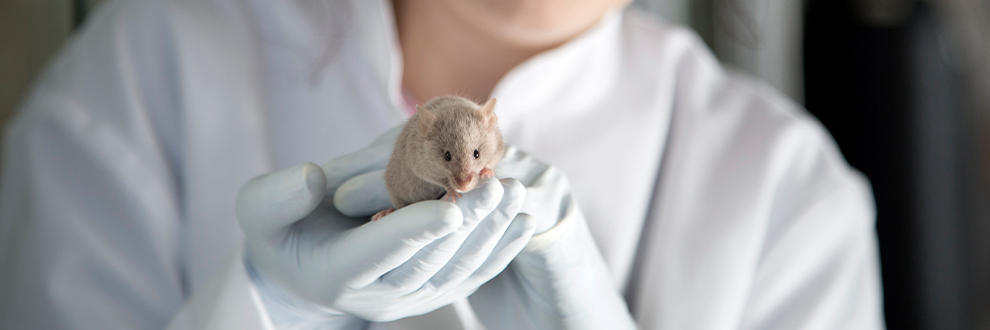
What are model animals?
- Vertebrate and invertebrate animals, including genetically modified and wild-type, used or bred for experimental purposes, such as monkeys, mice, minipigs, zebrafish, Xenopus, Caenorhabditis elegans, and Drosophila
- Genetically modified model animals are created by deleting, inserting, or controlling specific genes to achieve a desired phenotype, while non-genetically modified model animals are created by manipulating environmental factors using chemical, physical, or biological methods.
Applications
Research for understanding biological phenomena
Research on disease mechanisms
Research for evaluating drug efficacy and safety
Why is securing and researching model animal resources important?
- Increase in the demand for genetically human-like model animal resources by 11.5% annually; expansion of the global model animal market due to the growth of precision medicine and preclinical trials using animal models
- Research outcomes at the level of model animals with multiple organs and systems required in human-application research for the growth of 21st-century biotechnology such as gene editing technologies
- Experimental and management challenges, such as genetic mutations due to generational evolution; essential to establish and operate national-level specialized institutions for model animal development and management
Operates a "Model Animal Cluster" to support international-level sharing and utilization of model animal resources and provides infrastructure for distribution and information sharing
Institutions within the Model Animal Cluster
Model Animal Cluster Central Bank
- Development of Model Animal Central Bank (Information Sector) Korea Model Animal Priority Center (KMPC) : Supports international-level sharing and utilization of model animal resources through demand-driven infrastructure and standardized management systems
- Development of Model Animal Central Bank (Physical Resource Sector) KRIBB Laboratory Animal Resource & Research Center (LARRC) : Establishes a world-class strategic life science resource center for mice, enabling systematic acquisition, management, standardization, and sharing, fostering the central bank for physical model animals, and enhancing national competitiveness in bio-research and drug/resources development
Model Animal Cluster Regional Bank (as of 2022)
- Korea Zebrafish Resource Center (KZRC): Disease Modeling Zebrafish Bank
- Drosophila Resource Bank: Korea Drosophila Resource Center (KDRC)
- Xenopus Resource Bank
- Animal Bioactive Substance Resource Bank
- Korea C. elegans Resource Center (KCeRC)
- 랫드 자원거점은행
- Marmoset Resource Cooperative Center
- Primate Resource Bank: Primate Resources Center, KRIBB
- Mini Pig Resource Bank: Future Animal Resource Center, KRIBB
Model Animal Cluster Cooperative Center (as of 2022)
- Mouse Phenotyping Center
- Mouse Production and Development Center
- Germ-Free Mouse Production and Utilization Center
- Mouse Microbiome Standard Cooperative Center
- Mouse Model Cooperative Center for Drug Development
- Non-Genetic Mouse Disease Model Center
- Fluorescent Reporter Zebrafish Cooperative Center
- Drosophila Organ Model Cooperative Center
Research cases on model animal resources
Research Case, KRIBB Laboratory Animal Resource & Research Center (LARRC) (Physical Resource Sector of Model Animal Cluster)
In 2016, a study on “Screening Methods for Bipolar Disorder Therapeutics Using Top3B Gene Knockout Mice” was conducted. Successfully developed Top3B gene knockout mice exhibiting bipolar disorder-like behaviors, expected to serve as an effective animal model for studying the causes of bipolar disorder and screening preventive or therapeutic drugs.
Research Case, Korea Model Animal Priority Center (Information Sector of Model Animal Cluster)
- Conducted a study in November 2021 to develop a mouse model for in vivo imaging of inflammatory signals; successfully developed a mouse model allowing repeated, cell- and tissue-specific measurement of inflammatory signals ex vivo without the need for necropsy, enabling in vivo imaging
- A mouse model was successfully developed to allow in vivo imaging by repeatedly measuring tissue-specific inflammatory signals.
Notice
Login is required
Login is required to use the smarter search experience, BioOne-GPT.
Proceed to login?
